Since its establishment in 1951, the Sustainability Solutions Research Laboratory at the Faculty of Engineering of the University of Pannonia has been engaged in the study of environmental protection and technologies for the protection of the environment. Currently, its staff of 30 people (including 12 PhDs) provides the following services to cities in the field of sustainability and environmental protection:
-
- Measurement and modelling of load parameters (BOI, COD, TN, Cl, NO3, NO2, pH, NH4-N, sludge concentration, elemental analysis) of wastewater treatment plants to increase the efficiency of operation.
- SBR reactor experiments: operation of a sludge system, adaptation studies, increasing the efficiency of wastewater treatment, biodegradability studies for both industrial and municipal wastewater. We have extensive experience in testing and qualification of MBR technology.
- Investigation of the use of wastes as soil replacement media, plant growth experiments in an automated climate chamber, determination of elemental content of plants, soils and wastes by ICP and XRF measurements.
- Development of waste sorting technologies, modification proposals by modelling and sorting of plastic waste by optical sorting, determination of sorting settings.
- Processing and evaluation of existing environmental data in an integrated system. If required, preparation of a full environmental status assessment with evaluation of air, water, soil and ecological data.
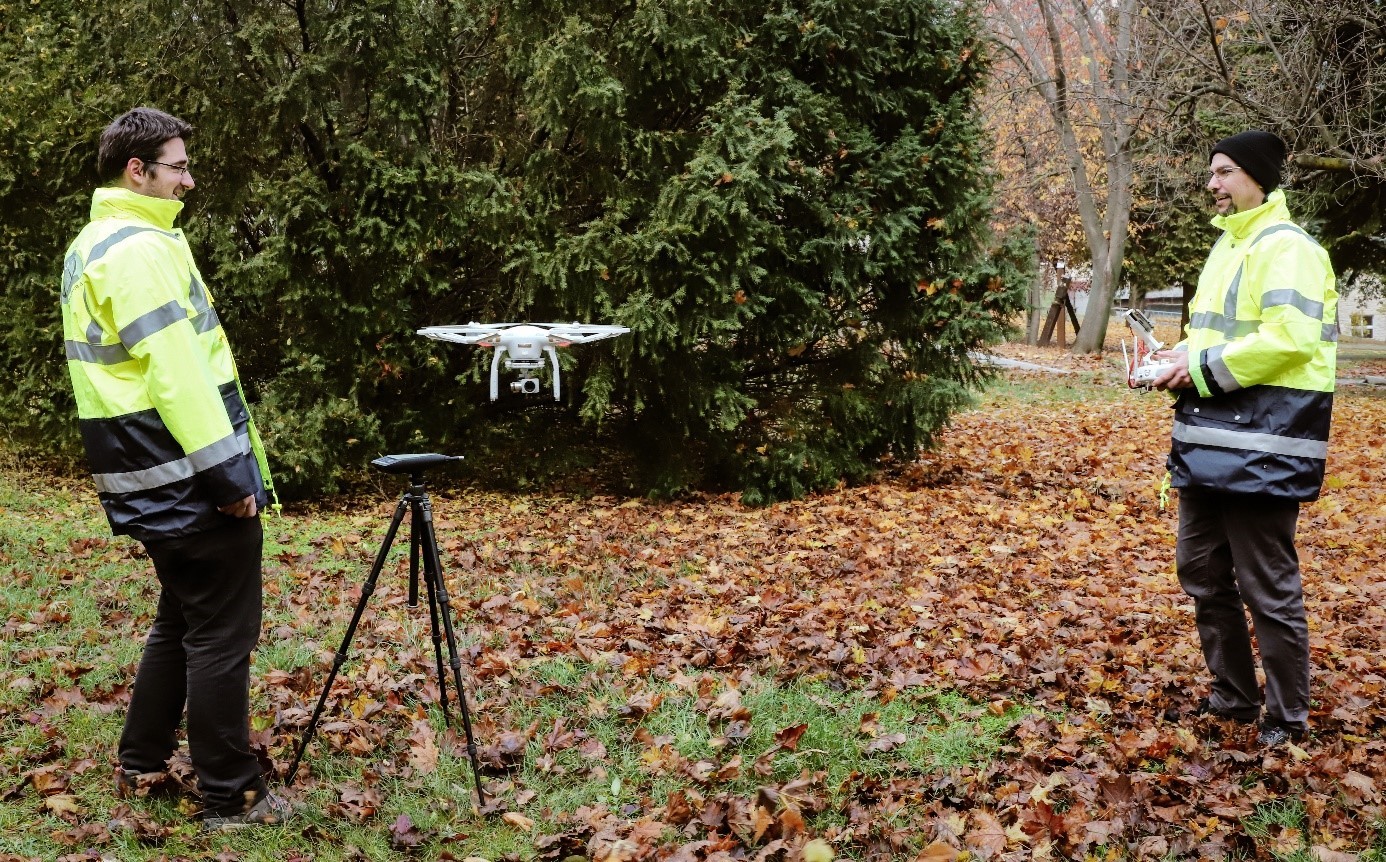
- Automatic mobile field water monitoring of surface waters (temperature, pH, dissolved oxygen, oxygen saturation, specific conductivity, turbidity, chlorophyll-a, PAH) and development of monitoring programmes. Sediment sampling and field measurements (pH, redox, conductivity), as well as automatic water sampling and classification according to the WFD.
- Measurement of air pollutant emissions, flue gas emission measurement (O2, CO, NO, NO2, SO2, H2S, CxHy, CO2).
- Climate strategy, greenhouse gas (GHG) inventory, preparation of Sustainable Energy and Climate Action Plan (SECAP), assessment of vulnerability of municipalities to climate change, preparation of sustainability reports.
- Spatial processing of urban structures (e.g., identification of potential sites for green space enhancement) and preparation of a green space strategy.
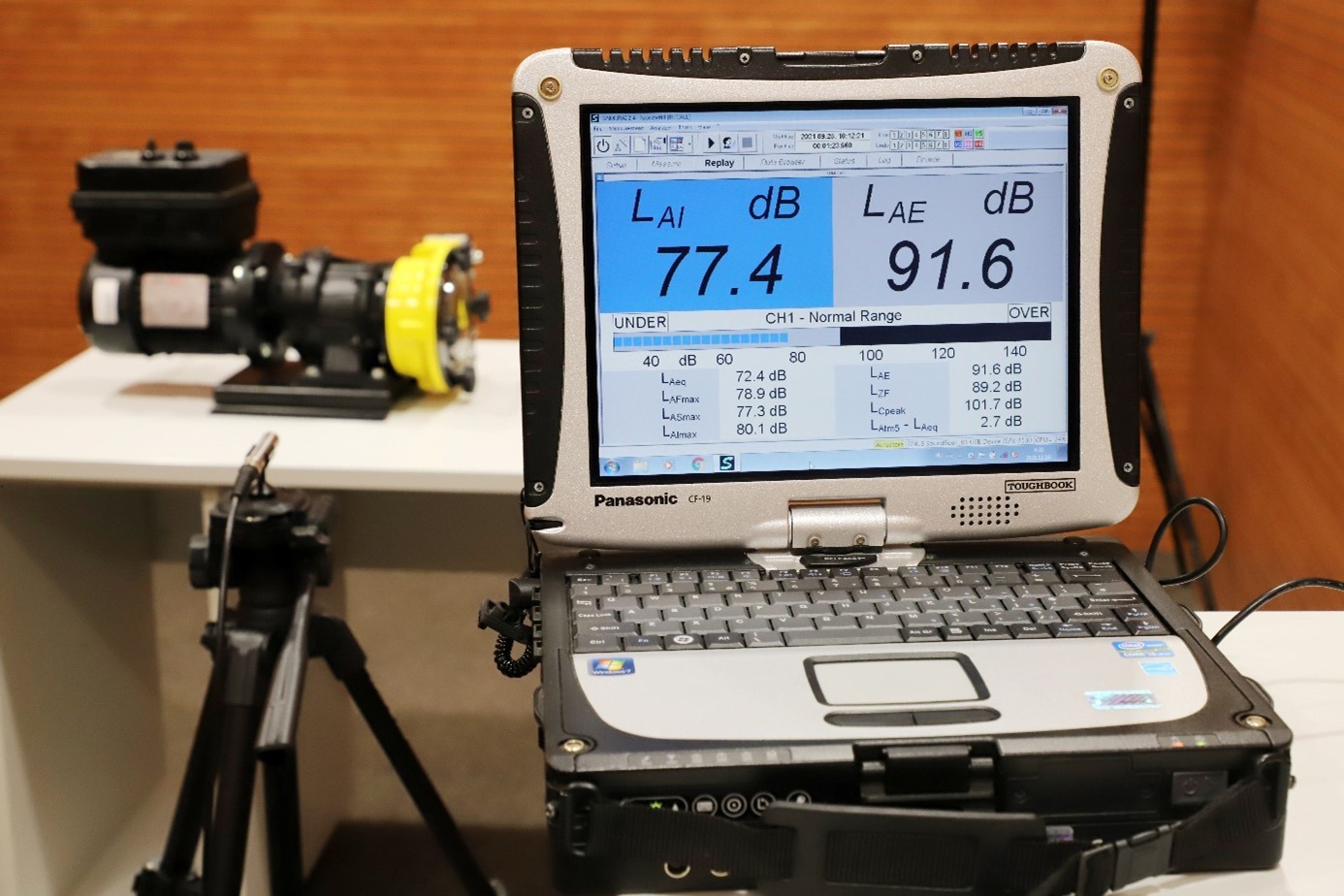
- Environmental noise measurements (sources of industrial and recreational noise, noise from construction activities, traffic noise), complex assessment, preparation of environmental noise maps.
- Soil analyses (pH (H2O), hy%, WHC, organic matter content (Walkley-Black method), T-value, KA, CaCO3, total salt %, conductivity, redox potential, etc).
- Orfactometric tests for the analysis of odor samples. Odor propagation modelling.