



The research group focuses on earth science questions with environmental implications, answered through interdisciplinary investigations in mineralogy, chemistry, and biology. Their instrumental background is provided by the Nanolab, established in 2018, equipped with transmission electron microscopy. General characteristics of their research include: 1) Inferences about large-scale processes based on observations in the nano- and micrometer size range; 2) Comparison of phenomena observed in natural systems with results from laboratory experiments; 3) Focus on the relationships between inorganic minerals and biological systems.
The group examines factors influencing carbonate mineral precipitation in aquatic environments, interactions between sediment minerals and photosynthetic organisms, and phosphorus cycling among minerals and microorganisms. Mineralogical examination of Lake Balaton sediment aids in understanding Holocene climate change and contemporary algal blooms. Atomic-resolution measurements clarify unresolved scientific questions related to the formation and structure of common rock-forming minerals such as aragonite and dolomite. Significant achievements include determining the unique properties of biominerals, especially bacterial magnetite, and biomimetic synthesis of magnetic nanostructures.
RESEARCH GROUP LEADER
Dr. Mihály Pósfai
University professor
Contact

Services and Infrastructure

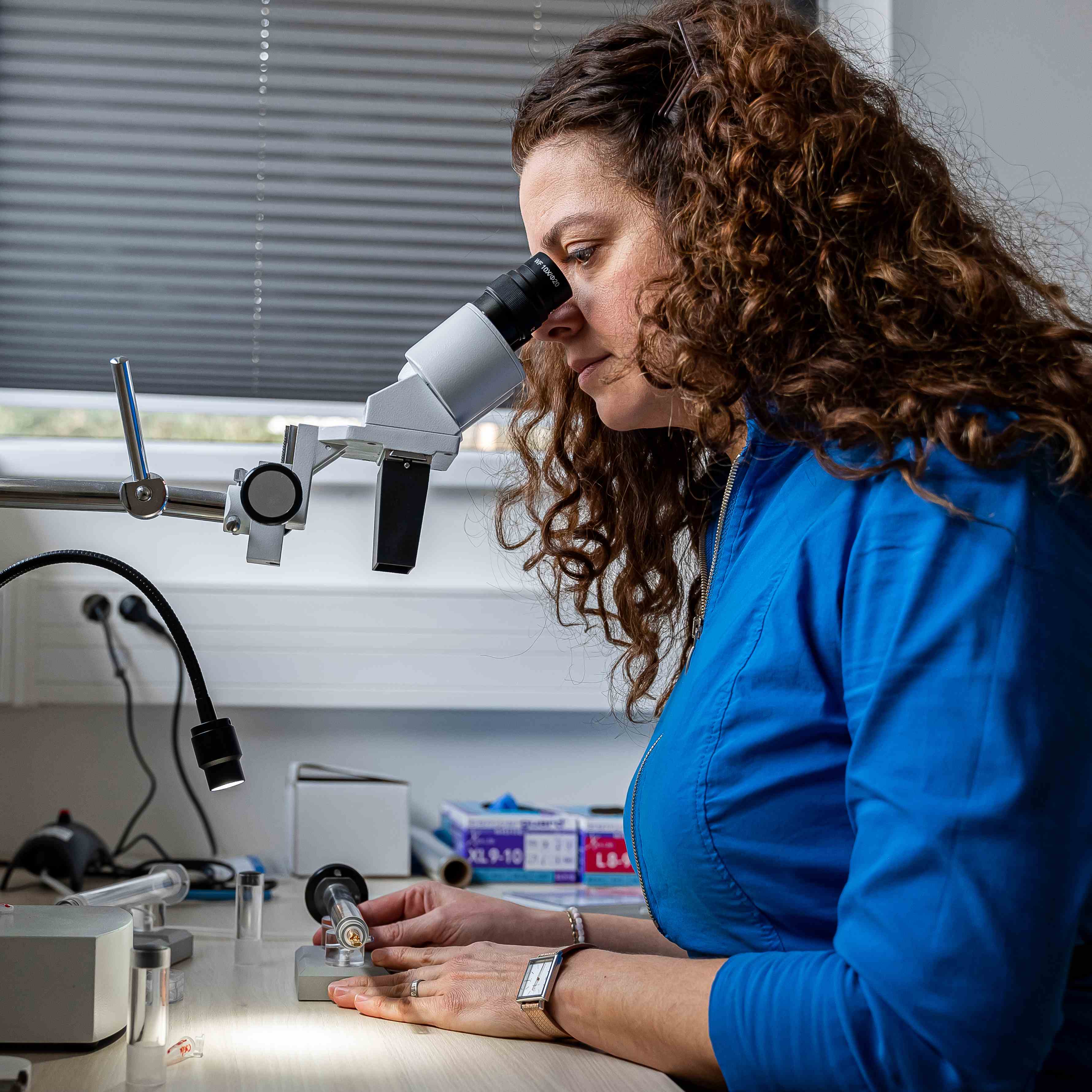
RMC PowerTome-PCZ ultramicrotome
Research Institute of Biomolecular and Chemical Engineering | HUN-REN-PE Environmental Mineralogy Research Group
Kutatási terület: Transmission electron microscopy, environmental geochemistry, nanoparticles and nanostructures, biominerals
It is suitable for creating transparent, semi-transparent, and ultra-thin (5 nm) sections of biological and other "soft" materials for electron microscopy with cryo adapter.
Technoorg Linda UniMill ion beam thinner
Research Institute of Biomolecular and Chemical Engineering | HUN-REN-PE Environmental Mineralogy Research Group
Kutatási terület: Transmission electron microscopy, environmental geochemistry, nanoparticles and nanostructures, biominerals
It is suitable for preparing ultrathin samples required for transmission electron microscopy examinations.
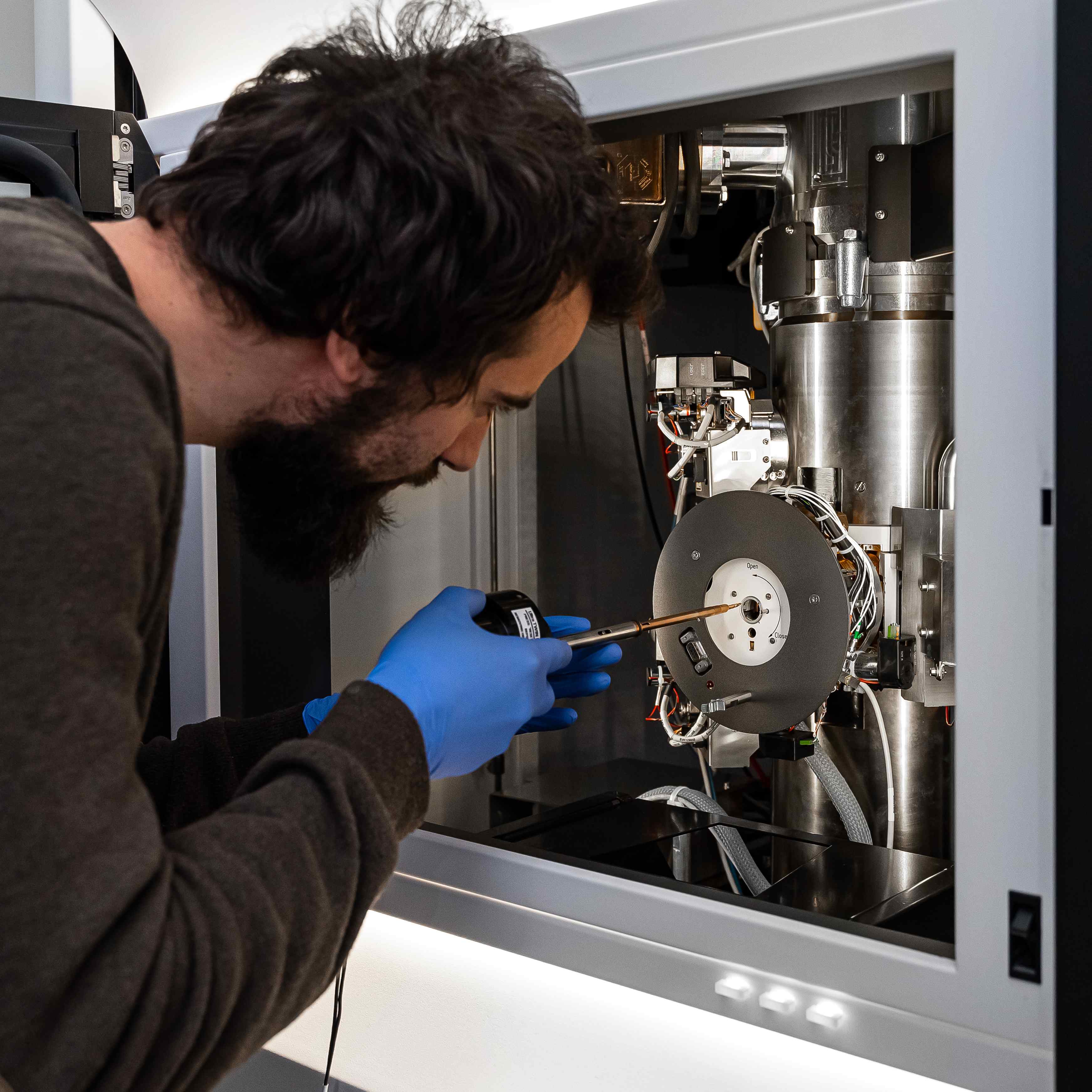
Thermo Fisher Talos F200X G2 transmission electron microscope
Research Institute of Biomolecular and Chemical Engineering | HUN-REN-PE Environmental Mineralogy Research Group
Kutatási terület: Transmission electron microscopy, environmental geochemistry, nanoparticles and nanostructures, biominerals
The instrument is capable of operating in both conventional transmission electron microscopy (TEM) and scanning transmission electron microscopy (STEM) modes. It provides simultaneous acquisition of imaging, structural (diffraction), and chemical information (via energy-dispersive X-ray spectroscopy) about the examined material, ranging from micrometers to atomic resolution.

Partners
- HUN-REN Csillagászati és Földtudományi Kutatóközpont, Budapest
- HUN-REN Balatoni Limnológiai Kutatóintézet, Tihany
- Jožef Stefan Institute, Ljubljana
- Universität Bayreuth, Bayreuth, Germany
- CEA Cadarache, France

Publications
- Dziuba, M. V., Müller F. D., Pósfai, M., Schüler, D. (2023) Exploring the host range for genetic transfer of magnetic nanoparticle synthesis. Nature Nanotechnology, 10.1038/s41565-023-01500-5.
- Meister, P., Frisia, S., Dódony, I., Pekker, P., Molnár, Z., Neuhuber, S., Gier, S., Kovács, I., Demény, A. and Pósfai, M. (2023) Nanoscale pathway of modern dolomite formation in a shallow, alkaline lake. Crystal Growth & Design, 2c01393.
- Molnár, Z., Dódony, I. and Pósfai, M. (2023) Transformation of amorphous calcium carbonate in the presence of magnesium, phosphate, and mineral surfaces. Geochimica et Cosmochimica Acta, 345, 90-101.
- Nyirő-Kósa, I., Ahmad, F., Hoffer, A. and Pósfai, M. (2022) Nanoscale physical and chemical properties of individual airborne magnetic particles from vehicle emissions. Atmospheric Environment: X, 15, p.100181.
- Molnár, Zs., Pekker, P., Dódony, I., Pósfai, M. (2021) Clay minerals affect calcium (magnesium) carbonate precipitation and aging. Earth and Planetary Science Letters, 567, 116971.