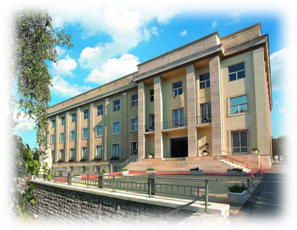
Doctoral School of Chemistry and Environmental Sciences

PhD in Chemistry or Environmental Sciences
Contact: Dr. András Liker, head of the school
Tel.: +36 88 624 - 568
E-mail:
Jancsek-Turóczi, Beatrix Ph.D., secretary of the school
Tel.: +36 88 624 - 536
E-mail:
For any studies related queries, please contact our colleagues at
The primary aim in our doctoral school is to train scientists who can continue their creative scientific work related to leading fields of chemistry and environmental sciences after completion of their MSc studies. The doctoral school was established in 2000 as the highest level of education in chemistry and environmental sciences at the University of Pannonia. Since then, more than 125 degrees have been granted.

Application
Entrance requirements
University degree (MSc) in chemistry, chemical engineering, environmental engineering, environmental science, limnology, biology, meteorology and geology (but not exclusively) may be appropriate for application.
The structure of the program
In the 8 semester long doctoral program at least 240 credits should be collected. In the first 4 semesters you can collect credits with studying (min. 48), teaching (max. 32) or publication and presentation of your scientific results in high quality journals and at various conferences. In the second two years you can collect credits exclusively with publication and presentation. A report on the scientific results achieved ought to be presented in every 2nd semester (for 20 credits each). For study, a choice of more than 80 subjects related to the main research fields in the doctoral school are offered.
- Duration: 2x4 semesters
- Number of credits: 240
- The tuition fee is 4500 EUR per semester for students enrolled in the 2025/26 I. semester, and 2200 EUR per semester for students enrolled from the 2025/26 II. and 2026/27 academic years.
- Application fee: 150 EUR
Research groups and topics
The following research groups with high-standard infrastructural and scientific capacity offers a wide variety of interesting and up-to-date research topics of high scientific and practical importance for completion of organised doctoral training.
- Atmospheric Chemistry
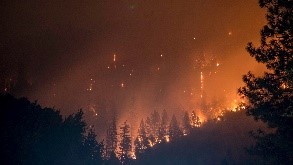
Assessment of the contribution of illegal solid waste burning in households and open fires to ambient PM10 concentrations in Hungary by laboratory tests and ambient aerosol measurements.
Study of the chemical mechanism of ultrafine particle formation by nucleation at polluted sites by laboratoy experiments and ambient measurements.
- Environmental Mineralogy
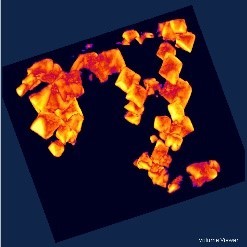 The research group pursues diverse research topics that involve nanoscale phenomena in minerals, such as carbonate formation in lacustrine environments; heterogeneous nucleation of Mg-bearing calcite and the precipitation of freshwater dolomite, and their roles in lake ecology. special characteristics of nanoscale magnetic crystals formed in magnetotactic bacteria, and the biomimetic synthesis of magnetic nanostructures. The group is responsible for operating Nanolab, a new electron microscopy facility of the University of Pannonia.
- Limnology
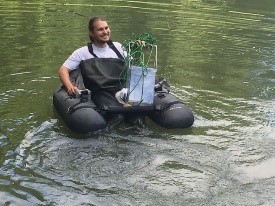 Developing traditional and environmental DNA based methods for ecological status assessment; revealing of spatial- (metacommunity approach), temporal- and environmental drivers of aquatic biodiversity including taxonomic and trait-based methods, distribution patterns of aquatic biota in context of the climate change; ecophysiology of algae; impact of pharmaceutical residuals on aquatic organisms.
- Ecooxicology
The laboratory is aimed at using alternative (non-invasive, animal-free) bioassays. Its main profile is the ecotoxicity assessment of airborne contaminants.
- Behavioral Ecology
 The research group investigates the effects of habitat urbanization and climate change-related extreme meteorological events on the reproductive success, survival, demography and behavior of the great tit (Parus major), a generalist passerine bird species occurring both urban and forest environments. They also study the causes and consequences of adult sex ratio variability, sexual selection and mating systems in several vertebrate taxa using evolutionary comparative methods.
- Analytical Chemistry – Separation Science
Study of adsorption processes in ion- and liquid chromatography by microscopic and macroscopic theories. Development and optimization of analytical HPLC methods for the analysis of biological macromolecules (proteins, peptides). Design and application of multidimensional separation methods for the analysis of complex environmental and biological samples.
- Radiochemistry and Radioecology
Study of natural radionuclides, especially with the radiological qualification of different environmental matrices, the measurement and modelling the physical-chemical behaviour of radionuclides in them and assessment of the human radiation exposure caused by the inhalation and/or ingestion of them.
Operational safety of nuclear facilities, e.g., studying of the contamination and corrosion processes of various structural materials as well as radioactive waste managements.
- Organic Chemistry – Synthesis and Catalysis
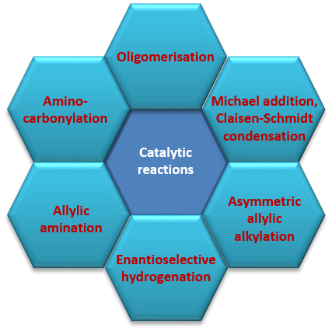 Catalytic applications of ionic liquids are explored in metal catalysed and organocatalytic reactions. The new methodologies are use in the synthesis of compounds of practical importance, such as steroid or ferrocene derivatives. / Various chiral synthons and biologically active molecules are synthesized in high yields. Novel, highly active chiral catalyst systems are synthesized by the fine tuning of the ligand structure for asymmetric hydrogenation and other types of enantioselective catalytic reactions.
- Bioorganic and Biocoordination Chemistry
Structural and functional models for the mononuclear and binuclear non-heme Fe(II) enzymes are studied to elucidate the catalytic pathways, mechanisms, and expand of chemistry from bioinorganic chemistry to bioinspired catalysis such as selective oxidations and oxidative coupling reactions. The correlation between the structure of the catalyst, and the efficiency, chemo-, regio-, and enantioselectivity of their catalytic process are also investigated.
- Modeling and Simulation of Complex Molecular Systems (https://mscms.uni-pannon.hu/)
The group studies transport, adsorption, and phase transition phenomena in nano- and mezoscale devices such as nanopores, ion channels, clay minerals, and complex fluids. The phenomena of interest include current rectification in nanopores, nanopore sensors, selective ion channels, modeling electrolytes and electrical double layers, kaolinite intercalation, separation efficiency in zeolites, corrosion studies, orientational and positional ordering of nonspherical particles in bulk and confinement. The applied method are computer simulations and statistical mechanical theories in the framework of a multiscale modeling approach.
- Environmental and Inorganic Photochemistry
 Homogeneous and heterogeneous photocatalytic systems are developed and applied for removal of organic pollutants and production of environmental friendly fuels such as hydrogen by utilization of solar radiation. Structures of various compounds and the dynamics of their reactions are calculated by quantum chemical methods.
More detailed descriptions of most of he research groups are given at
https://mk.uni-pannon.hu/index.php/en/research-groups
 H-8200 Veszprém, Egyetem u.10.
H-8201 Veszprém, Pf. 158.
Telefon: (+36 88) 623-515
Internet: www.uni-pannon.hu
PhD
in
Chemistry or
Environmental Sciences