

- Call for Application for Stipendium Hungaricum Dissertation Scholarship
- Supervisor statement sample (Stipendium)
- Stipendium Hungaricum scholarship programme admission procedure
-
Ez az e-mail-cím a szpemrobotok elleni védelem alatt áll. Megtekintéséhez engedélyeznie kell a JavaScript használatát.


 Chemical Engineering and Material Sciences Doctoral School (CEMSDS)
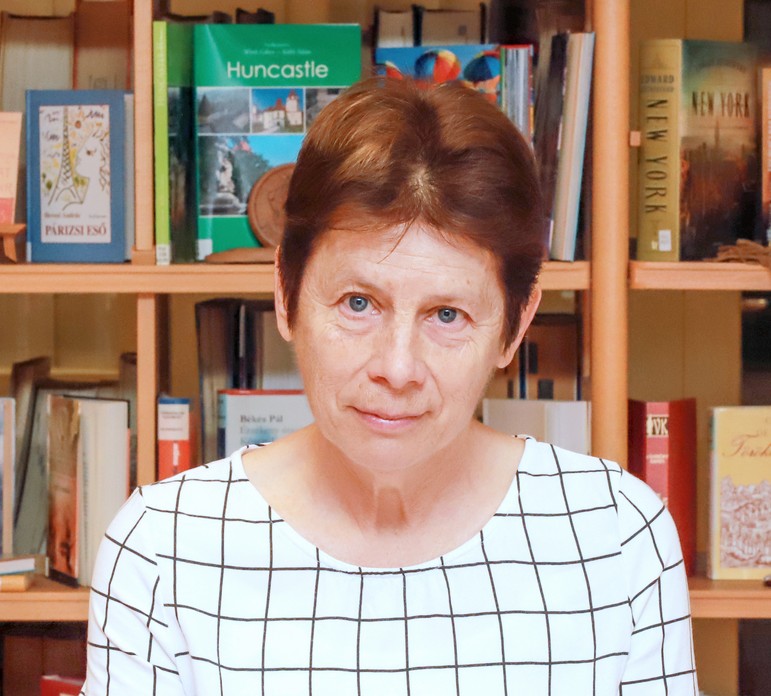
Head of the Doctoral School
Dr. Katalin Bélafiné Bakó
Research Institute of Bioengineering, Membrane Technology and Energetics
E-mail:Ez az e-mail-cím a szpemrobotok elleni védelem alatt áll. Megtekintéséhez engedélyeznie kell a JavaScript használatát.
Research Institute of Bioengineering, Membrane Technology and Energetics
E-mail:
Secretary of the Doctoral School
Dr. Tóth-Bodrogi Edit
Department of Radiochemistry and Radioecology
E-mail:Ez az e-mail-cím a szpemrobotok elleni védelem alatt áll. Megtekintéséhez engedélyeznie kell a JavaScript használatát.
Department of Radiochemistry and Radioecology
E-mail:
For any studies related queries, please contact us at
PhD in “materials science and technology” or in “bio-, environmental-, and chemical engineering sciences”
 Duration: 8 semesters
Number of credits: 240
The tuition fee is 4500 EUR per semester for students enrolled in the 2025/26 I. semester, and 2200 EUR per semester for students enrolled from the 2025/26 II. and 2026/27 academic years.
Application fee: 150 EUR
Scholarships covering the tuition fee and providing a monthly allowance can be granted by the STIPENDIUM HUNGARICUM program: http://studyinhungary.hu/study-in-hungary/menu/stipendium-hungaricum-scholarship-programme
The aim of the program
The primary aim of our doctoral school is to train scientists who can continue their creative scientific work related to leading fields of chemical engineering and material sciences after finishing their PhD studies. The doctoral school was established on January 1, 2001 as the highest level of chemical engineering education at University of Pannonia. Since then, more than 100 students have earned the PhD degree in our doctoral school.
The structure of the program
In the first 4 semesters credits can be collected with studying, teaching or publishing scientific results in high quality journals. The remaining credits can be collected with teaching and publishing in the final two years. The minimal credit requirements for these three parts can be seen in the figure.
Research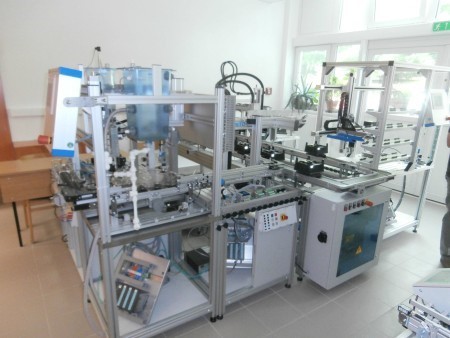
You can start your research activity in the following main research fields of our doctoral school under the guidance of some internationally recognized scientists (by clicking on names the publication lists will open):
- Material analysis methods and surface chemistry
Supervisors of the field: Professor Dr. János Kristóf and Dr. Imre Timár
- Process engineering sciences
Supervisors of the field: Professor Dr. János Abonyi and Dr. Sándor Németh
- Intelligent materials and technologies
Supervisors of the field: Professor Dr. István Szalai
- Procedures and material systems from ceramic industry
Supervisors of the field: Professor Dr. Erzsébet Horváth
- Up-to-date Chemical Unit Operations
Supervisors of the field: Dr. Pethő Dóra and Dr. Géza Horváth
- Environmental engineering technological systems
Supervisors of the field: Dr. Endre Domokos
- Process and Products of the Hydrocarbon Processing Industries
Supervisors of the field: Professor Dr. Jenő Hancsók and Dr. László Bartha
- Molecular and nanotechnologies
Supervisors of the field: Professor Dr. Ferenc Vonderviszt and Professor Dr. István Bársony
- Biotechnology
Supervisors of the field: Professor Dr. Katalin Bakó and Professor Dr. László Gubicza
 Qualifications and skills can gather in the PhD study
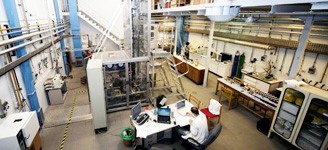
- theoretical and practical skills associated with the discipline, and the practical application thereof in the laboratory;
- understanding, critical evaluation and creative application of recent scientific results of the discipline;
- the knowledge required to fill leading positions in workplaces related to engineering;
- expert methods of computer science and computational analysis;
- understanding and application of problem-solving techniques necessary for scientific research on a wider scale;
high level publication and presentation skills.
Entrance requirements for the PhD program
MSc degrees accepted for entrance into the PhD program without further conditions: Chemical Engineering (MSc), Biochemical Engineering (MSc), Material Engineering (MSc), Environmental Engineering (MSc).
Career prospects
Research-related jobs usually require a PhD degree, for which this course provides the necessary qualification. PhD graduates have the appropriate skills to continue their scientific career in at University of Pannonia or at other universities, or research institutes.
During the study PhD students are involved into the lecturing and also project works, which are usually corresponding to actual industrial problems with important representatives of industrial cooperation. Hence, next to the scientific conferences there is another way to increase the social network.
Student life
Students can choose from a wide range of extra-curricular activities. They can join clubs with different activities and meet others interested in similar hobbies. There are many possibilities to do sports and fitness on campus or at dormitories.
The association of PhD students organize every year a meeting to recognize research activity of PhD students in other doctoral schools of University of Pannonia and which makes possible interdisciplinary cooperation.